In today's digital age, a Smart Home Hub serves as the central command for various connected devices. This technology interlinks smart appliances, security systems, and lighting controls. With a Smart Home Hub, users can simplify their interactions with multiple devices, turning their homes into a seamless space of convenience and efficiency.
Many people are drawn to the idea of smart homes. However, understanding how a Smart Home Hub works is crucial for effective utilization. It streamlines communication between devices, allowing for easy management through a single interface. Yet, not everyone may grasp the full potential of this hub.
Adoption of a Smart Home Hub can lead to improved home management. Yet, reliance on technology might create challenges. Users may face compatibility issues and setup challenges. Balancing convenience with potential drawbacks requires thoughtful consideration.
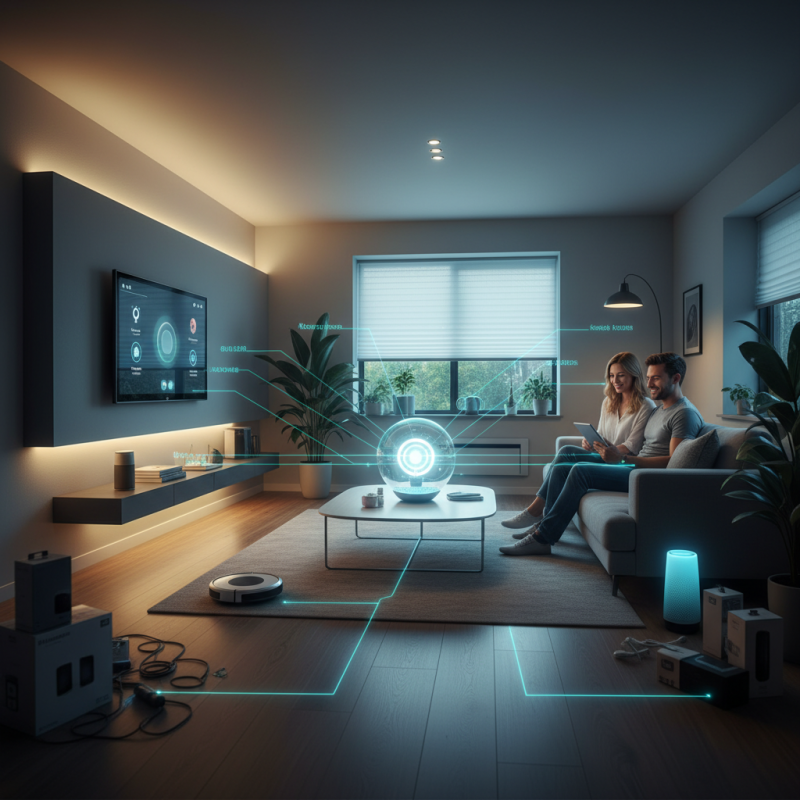
A smart home hub plays a pivotal role in modern smart living. It acts as a centralized controller for various smart devices, enabling seamless communication and automation. According to a recent study, over 70% of smart home users prefer systems that integrate multiple devices through a single hub. This integration simplifies user interaction and enhances the overall experience.
One defining feature of a smart home hub is compatibility. It should support various protocols, such as Zigbee or Z-Wave. This broad compatibility allows users to choose devices from different manufacturers without worrying about connectivity issues. However, not all hubs support every device, which can be a source of frustration.
Tips: When selecting a smart home hub, consider your existing devices. Research if the hub supports them. Additionally, evaluate the hub’s user interface. A complicated interface can lead to a poor user experience and make automation challenging.
As smart home technologies evolve, some users still find challenges. Connectivity issues may arise, causing devices to disconnect unexpectedly. Regular software updates from the hub manufacturer are crucial. Always check for updates to ensure smoother operation. Balancing convenience with potential downsides is essential for a successful smart home setup.
Smart home hubs serve as central control points for various connected devices in a smart home, allowing seamless communication and integration. The global smart home market is estimated to reach $135 billion by 2025, reflecting a growing interest in these technologies. The primary functions of a smart home hub include device management, automation, and remote access. These hubs create a unified interface that simplifies control over lights, thermostats, security cameras, and appliances.
Through sophisticated protocols like Zigbee and Z-Wave, smart home hubs enable compatibility across multiple devices. This ensures that even products from different manufacturers can work together. According to Statista, the number of connected smart home devices worldwide will reach over 30 billion by 2025. Data-driven insights reveal that homeowners increasingly prioritize energy efficiency and security features when selecting smart home devices.
**Tip:** When setting up a smart home hub, ensure your network is secure to protect your devices from vulnerabilities. Always update firmware regularly to address potential security risks. Not all devices function perfectly together, and troubleshooting may be necessary. Monitoring device performance can prevent frustration and increase satisfaction with your smart home ecosystem.
A smart home hub serves as a central point to connect various smart devices. Integration relies heavily on established protocols and compatibility standards. These ensure that devices from different manufacturers can communicate effectively. Popular protocols include Zigbee, Z-Wave, and Wi-Fi. A well-integrated home hub can streamline device management and enhance user experience.
Compatibility is crucial. Not all devices work well together. It’s essential to research which protocols your devices support before choosing a hub. Some hubs only work with a specific type of technology. Check connections and read user feedback. This reduces potential frustrations later.
Tips: Always opt for devices that support multiple protocols. This adds flexibility for future upgrades. Regular firmware updates for your hub keep compatibility fresh. Test out new devices slowly, to monitor how they perform in your setup. Start simple and expand gradually. This approach can help you identify issues early on.
The market for smart home hubs has been experiencing significant growth. Recent statistics indicate a steady increase in adoption rates across various demographics. More households are embracing automation, driven by the desire for convenience and energy efficiency. Recent reports suggest that the smart hub market could see double-digit growth in the next few years.
However, challenges remain. Many consumers are still apprehensive about adopting new technology. The learning curve can be steep, and not all hubs are user-friendly. Some users face compatibility issues between devices, leading to frustration. Additionally, data privacy concerns linger, impacting the decision-making process for potential users. This hesitation highlights the importance of user education and transparent data practices.
Despite these challenges, the overall trend shows promise. Homes equipped with smart hubs can streamline daily tasks. From managing lighting to enhancing security systems, the potential benefits are substantial. As technology evolves, addressing consumer concerns can enhance adoption rates even further. The future of smart hubs looks bright, but it requires continuous improvement and consumer trust.
| Year | Units Sold (Millions) | Market Growth Rate (%) | Adoption Rate (%) | Key Features |
|---|---|---|---|---|
| 2020 | 15 | 20 | 12 | Voice Control, Remote Access |
| 2021 | 20 | 25 | 18 | Home Automation, Energy Monitoring |
| 2022 | 30 | 30 | 25 | Integration with IoT, Security Features |
| 2023 | 45 | 35 | 30 | Smart Assisting, Cross-Device Compatibility |
The landscape of smart home hubs is rapidly evolving. Emerging technologies are transforming how we interact with home automation. For example, the integration of artificial intelligence is enabling hubs to learn user preferences over time. This means that your home can adapt to your routines, adjusting lighting and temperature automatically.
Voice recognition technology is becoming more refined. It allows users to control devices through simple commands. Imagine asking your hub to dim the lights while you settle in for a movie. Additionally, the concept of interoperability is gaining traction, allowing different devices to communicate seamlessly, regardless of the manufacturer. However, achieving true compatibility remains a challenge in the industry.
Security features are also advancing. Enhanced encryption methods are critical as more devices connect to the internet. Yet, even with these advancements, vulnerabilities still exist. Users must be aware of potential risks connected to smart home technology. They should regularly update devices and change default passwords. This proactive approach can significantly enhance security while enjoying the benefits of smart automation.
: A smart home hub centralizes control of connected devices, allowing easier management and automation.
Hubs use protocols like Zigbee and Z-Wave, enabling communication between devices from different manufacturers.
Not all devices work well together, so it's important to check supported protocols before purchasing.
Ensure your network is secure, update firmware regularly, and change default passwords to protect devices.
Regularly check device functionality and troubleshoot issues to improve satisfaction with your smart home ecosystem.
Technologies like AI and voice recognition enhance automation and convenience but require careful monitoring.
Test new devices gradually to gauge performance and address potential issues from the start.
Focus on energy efficiency and security features, which are increasingly important to homeowners today.
Security risks exist, so using encryption and being proactive about updates is essential for safety.
Start with a few devices, then gradually add more, ensuring compatibility and monitoring performance closely.
A Smart Home Hub is a central device that acts as the brain of a smart home, allowing users to control various connected devices seamlessly. Defined by its ability to integrate different smart devices through various protocols and compatibility standards, the hub facilitates automation and enhances the overall user experience. Key features often include device management, remote accessibility, and the capability to create customized scenarios for different settings.
Market trends indicate a growing adoption of Smart Home Hubs, driven by advancements in technology and increased consumer interest in smart living solutions. Future innovations are expected to focus on emerging technologies that enhance functionality, security, and energy efficiency, making Smart Home Hubs even more integral to modern households. As the landscape evolves, these hubs will continue to play a crucial role in shaping the future of home automation and connectivity.

NOVA New Energy