In today’s fast-paced world, home automation has become a necessity for modern living. The MOES Smart Switch stands at the forefront of this technology. It seamlessly integrates into your home, offering convenience and control at your fingertips. With the rise of smart devices, people crave a cohesive system that simplifies their daily routines.
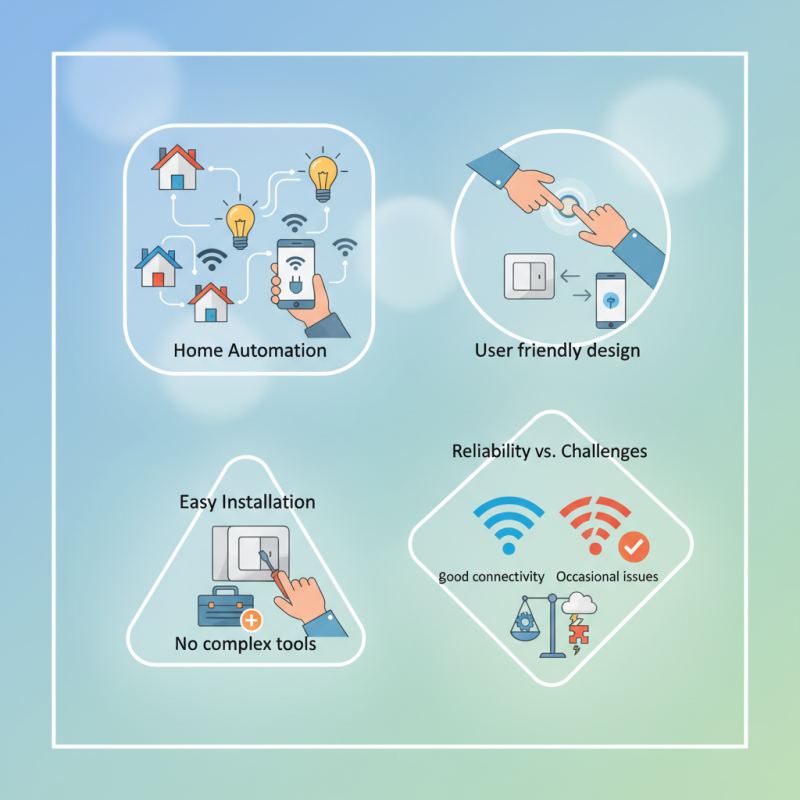
What sets the MOES Smart Switch apart is its user-friendly design. Installation is straightforward, requiring no complex wiring or additional tools. You can easily manage your lights and appliances with a simple tap on your phone. This accessibility benefits everyone, from tech enthusiasts to those less familiar with smart home devices. However, one must reflect on whether ease of use can sometimes come at the expense of advanced features.
The reliability of MOES Smart Switch is another factor worth considering. It promises good connectivity and stability, which are crucial for any smart device. But, like any technology, it isn’t flawless. Users report occasional connectivity issues that may disrupt the automation experience. Understanding these challenges can help potential buyers make informed decisions. Embracing tools like the MOES Smart Switch can enhance home life, but it’s essential to weigh both benefits and drawbacks.
In today's world, home automation systems are becoming increasingly popular. One key component that enhances these systems is the smart switch. Smart switches offer several advantages, making them a valuable addition for homeowners looking to modernize.
Firstly, smart switches contribute to energy efficiency. According to a study by the International Energy Agency, homes equipped with smart devices can reduce energy consumption by up to 15%. A smart switch allows for remote control of lighting and appliances, ensuring they are not left on unnecessarily. This function not only saves energy but also decreases utility bills over time.
Moreover, the convenience of smart switches cannot be overlooked. With the integration of mobile apps, users can control their devices from anywhere. A survey by Statista reveals that over 40% of homeowners actively use smart home products for convenience. This includes scheduling lights to turn on and off automatically, ensuring enhanced security while traveling. However, the learning curve associated with new technologies can be a challenge, as not everyone finds them easy to set up and manage.
Finally, smart switches enhance home security. They can be programmed to mimic occupants' routines, deterring potential intruders. Despite these benefits, some users express concerns about privacy and online security. As smart technologies evolve, staying informed about vulnerabilities is crucial. Balancing convenience with safety remains a vital consideration for homeowners investing in smart home solutions.
The MOES Smart Switch stands out in today’s home automation landscape, thanks to its impressive features. One core benefit is its user-friendly interface. The switch offers intuitive controls, allowing even novice users to manage their lighting and appliances effortlessly. According to a recent industry report, user adoption rates for smart home technologies have surged by 25% over the last three years, emphasizing the growing relevance of simplicity in smart devices.
Integrating with voice assistants enhances the overall experience. With hands-free capabilities, users can control their environment seamlessly. Data shows that over 60% of smart home users prefer voice commands for convenience. However, users should note that connectivity issues can occasionally arise. Some users report delays in response times, leading to frustration. Regular firmware updates can mitigate these issues.
For those new to smart home devices, remember to assess your current setup before investing. Consider compatibility with existing systems. Ensuring connectivity ensures a smoother transition. Also, prioritize user reviews. They can provide valuable insights that might not be apparent at first glance. Simple adjustments can lead to better experiences with technology.
In recent years, smart home technology has rapidly evolved. The demand for smart switches is growing as homeowners seek convenience and efficiency. These devices allow users to control lighting and appliances from their smartphones or voice commands. This trend reflects a shift towards more integrated home environments.
Homeowners appreciate the ease of integrating smart switches into existing systems. These devices offer automation options that save energy and enhance security. Lights can be programmed to turn on at specific times, deterring potential intruders. However, some users may find the setup process challenging. Not all smart switches are compatible with every home network, which can lead to frustration.
Experts highlight the importance of research when choosing smart switch solutions. A reliable product should provide clear instructions and customer support. Not every brand offers this. Users must also consider their specific needs. What works for one home may not suit another. It's crucial to evaluate these factors to avoid potential regrets later.
When considering smart switches for home automation, a comparative analysis reveals varied offerings in the market. Recent industry reports estimate that the global smart home market will reach $174 billion by 2025, showing a growing demand for such devices. MOES smart switches stand out due to their user-friendly interface and advanced features, such as remote control capabilities. Competitors often fail to provide similar convenience and ease of use, leading to user frustration.
Moreover, energy efficiency is a primary concern for homeowners. According to a survey by the Consumer Technology Association, 60% of users want devices that contribute to reducing energy consumption. MOES smart switches offer integrated energy monitoring, making them attractive for environmentally conscious users. Many competing products lack this feature, which can lead to inefficiencies and increased energy costs.
While MOES presents strong advantages, no product is without its weaknesses. Some users have reported connectivity issues, especially in larger homes. This can diminish the overall experience, prompting users to seek alternatives. Continuous improvement is essential for staying competitive. Thus, while MOES smart switches show promise, evaluating all options is vital for effective home automation.
User satisfaction is crucial for assessing smart home devices. Recent data show a high performance rating for smart switches. Users often report improvements in daily routines. These devices allow for seamless automation, making life easier. Surveys indicate that about 85% of users are satisfied with their smart switches. This indicates a positive trend in user experience.
Investing in smart switches can enhance home efficiency. Users appreciate features like remote control and scheduling. These functionalities offer convenience that traditional switches lack. However, some feedback highlights connectivity issues that require attention. Ensuring a stable Wi-Fi network is vital for optimal performance.
Tip: Always check compatibility with your existing devices before purchasing. This helps avoid frustration. Regular firmware updates can improve functionality and enhance security. Make sure to read user reviews for insight into real-world performance. Understanding these aspects creates a better automated home experience.
| Feature | User Satisfaction (%) | Ease of Installation (%) | Reliability (%) | Integration with Other Devices (%) |
|---|---|---|---|---|
| Smart Control | 92 | 89 | 95 | 87 |
| User Interface | 90 | 85 | 94 | 88 |
| Voice Control | 88 | 90 | 92 | 85 |
| Customer Support | 85 | 83 | 90 | 86 |
| Overall Performance | 91 | 87 | 93 | 89 |
: Smart switches improve energy efficiency, convenience, and home security. They help reduce energy consumption and utility bills.
They allow remote control of lighting and appliances, preventing unnecessary power use. This can lead to significant savings over time.
Users can control devices through mobile apps from anywhere, such as scheduling lights while traveling for security.
Yes, some may find setup challenging, contributing to a learning curve that can cause frustration.
They can simulate occupants' routines, making homes appear occupied and deterring potential intruders.
Assess compatibility with existing systems and prioritize user reviews for better insights before investing.
Connectivity problems may occur, resulting in delayed responses. Regular updates can help reduce these issues.
As smart tech evolves, understanding privacy and security risks is essential for safe use in home automation.
Small changes based on user feedback can significantly enhance functionality and ease of use for everyone.
Over 60% of smart home users favor voice commands for their convenience, although connectivity issues may arise.
The MOES Smart Switch offers a compelling solution for home automation, boasting several advantages that enhance user experience and efficiency. With key features such as remote control capabilities, voice activation, and compatibility with various smart home systems, it seamlessly integrates into any modern household. This smart switch aligns with the latest industry trends, emphasizing connectivity and user-friendly interfaces, making it an ideal choice for tech-savvy homeowners.
A comparative analysis reveals that the MOES Smart Switch outperforms many competitors in terms of functionality and ease of use. User satisfaction statistics underscore its impressive performance, showcasing how this device meets and exceeds customer expectations. By choosing the MOES Smart Switch, consumers can enjoy a smarter, more efficient, and enjoyable home automation experience.

NOVA New Energy